Distributed Long-Range Monitoring Network

Architected and deployed a multi-node 915 MHz wireless monitoring network with custom firmware, PCB design, and a containerized telemetry pipeline for real-time alerting in RF-obstructed environments.
Type
Independent
Timeframe
Jan 2026
 - 
Jun 2026
 (Est.)
Status
In Progress

Overview

This project is a ground-up distributed monitoring system designed for environments where commercial solutions fall short, specifically, areas with heavy RF obstruction, no existing network infrastructure, and a need for long-duration autonomous operation. The system uses sub-GHz radio links to connect 11+ sensor nodes across 250+ meters to a central gateway, feeding real-time data into a full telemetry and alerting pipeline. Every layer from the firmware and power circuits to the gateway software stack was designed and built from scratch.
Goals

  • Design a scalable wireless sensor network capable of reliable operation in RF-obstructed, infrastructure-limited environments.
  • Develop custom low-level firmware with event-driven architecture supporting configurable telemetry, alarm triggering, and sensor integration.
  • Create power-efficient hardware with 24–48 hour battery backup and real-time voltage monitoring.
  • Build a containerized gateway stack for data ingestion, storage, visualization, and remote alerting.
  • Validate system performance through real-world field deployment.
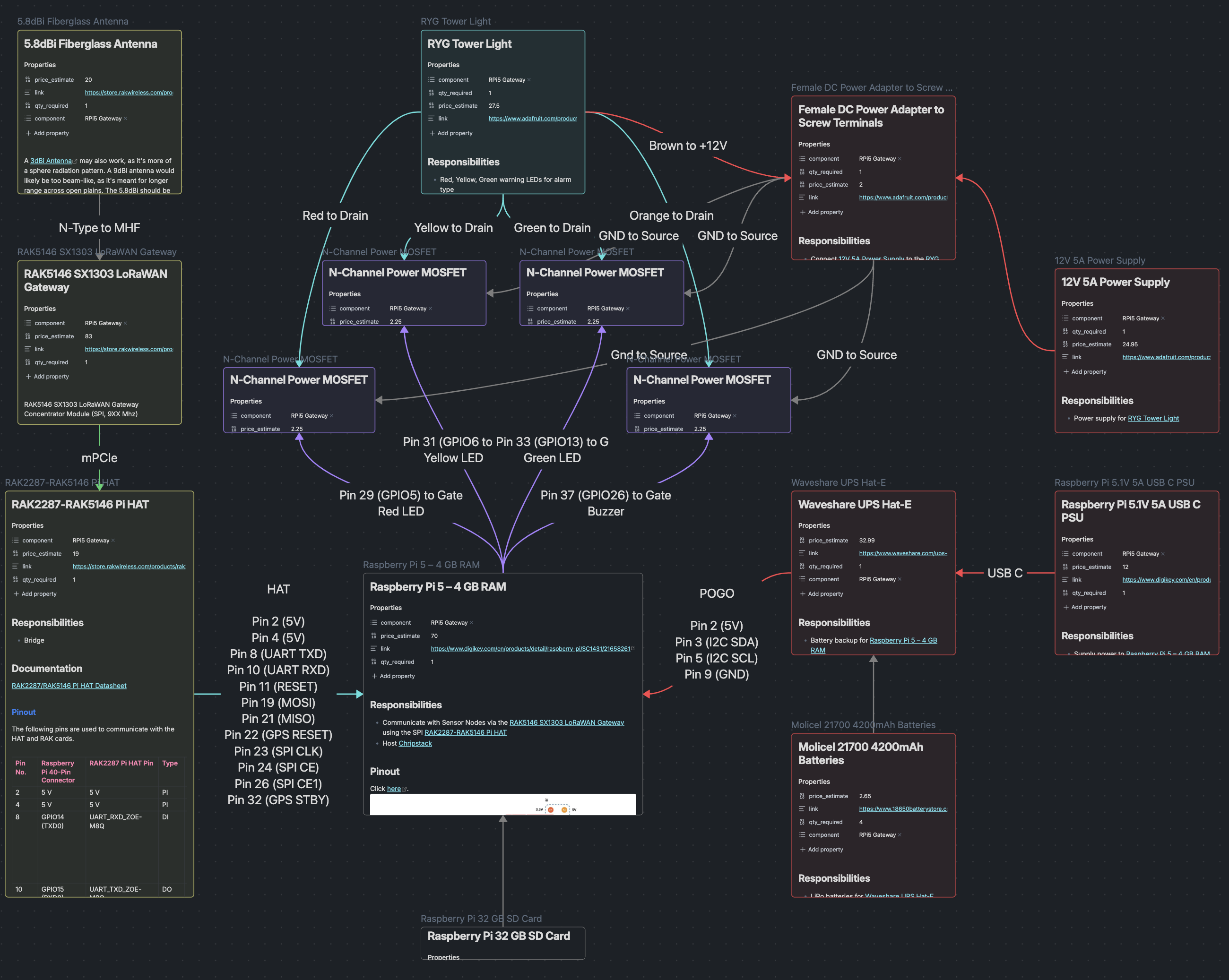
An early functional diagram of the gateway.

How Was It Made?

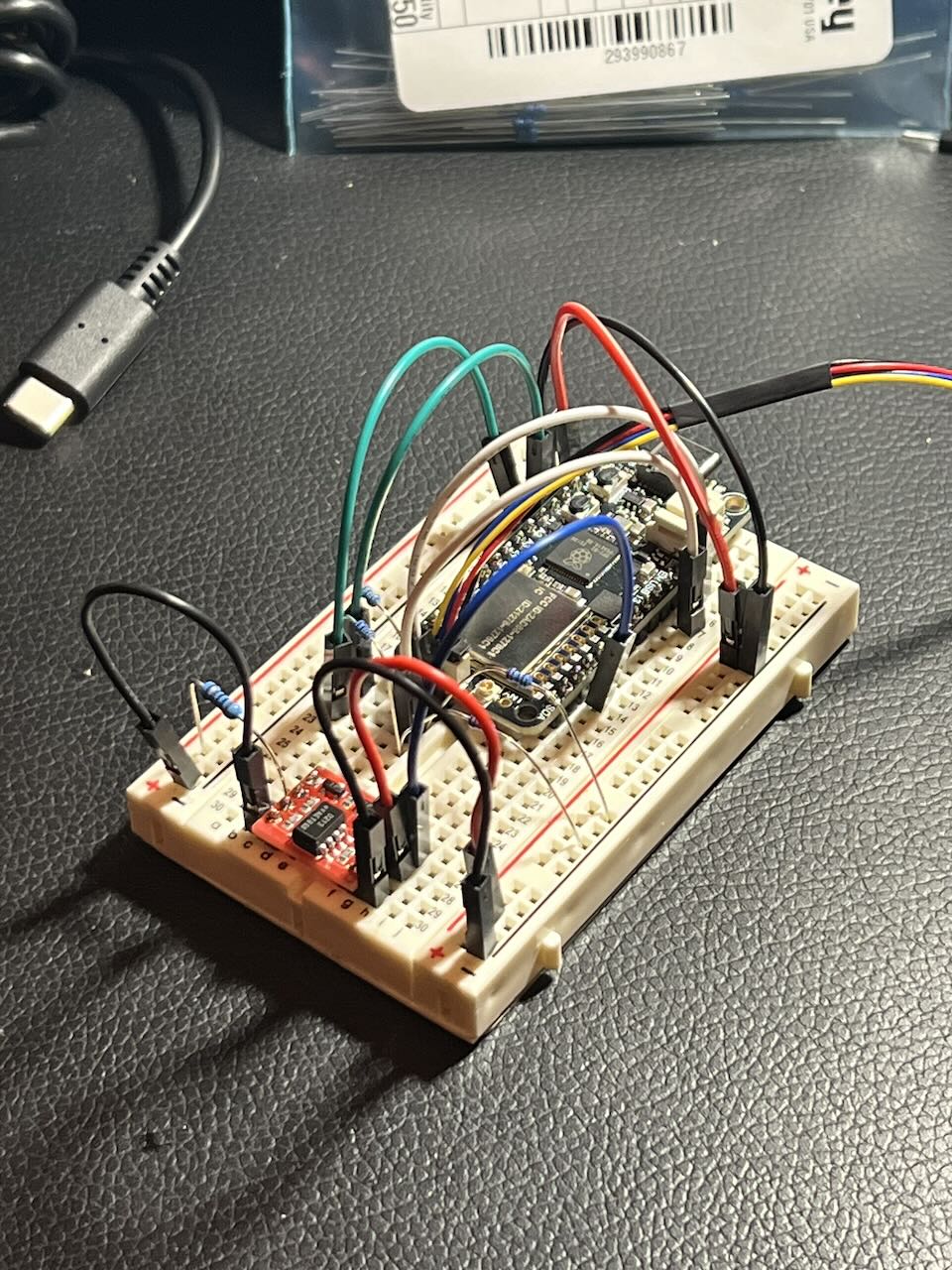
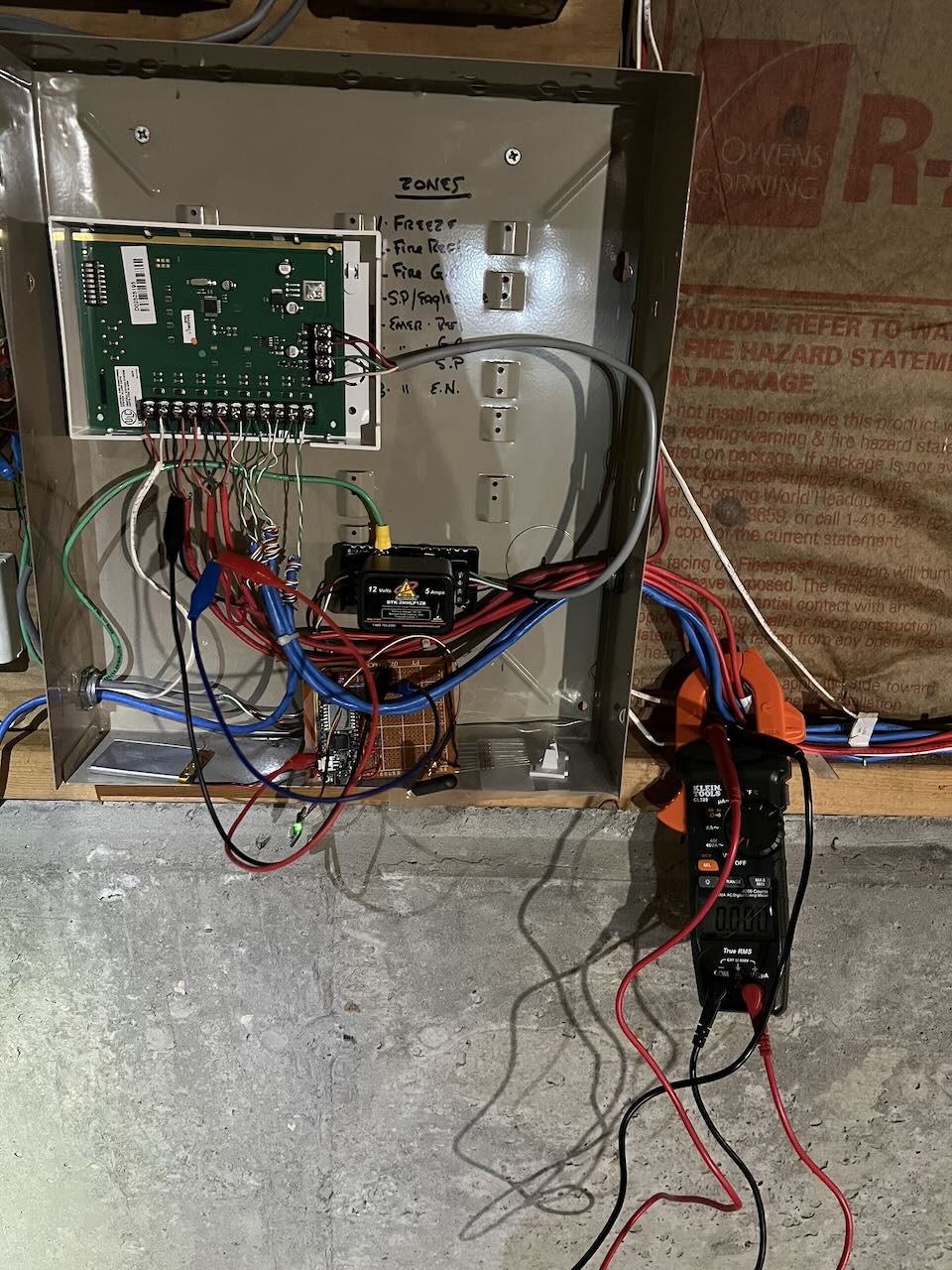
Early testing of a basic prototype node to ensure functionality and integration with existing systems.
  • Designed custom PCBs in KiCad integrating K-type thermocouples, RF modules (915 MHz), and LiPo power management circuits operating at 32 mA nominal / 40 mA peak draw.
  • Verified RF link performance and antenna matching using a Vector Network Analyzer (VNA).
  • Wrote event-driven C++ firmware for microcontrollers handling sensor polling, alarm logic, and configurable telemetry scheduling.
  • Built a multi-channel gateway on a Linux single-board computer running ChirpStack, Node-RED, InfluxDB, and Grafana.
  • Containerized the full gateway stack with Docker for repeatable, one-command deployment.
  • Deployed field nodes and validated end-to-end system performance under real-world conditions.

Results

  • Achieved reliable data transmission across 250+ meters in RF-obstructed environments with 11+ active nodes.
  • Maintained 24–48 hour autonomous node operation on LiPo backup power.
  • Delivered real-time dashboards and remote alerting via Grafana and hardware alarms (tower lights, buzzers, etc.).
  • Established a repeatable deployment pipeline with the full gateway stack deployable with a single command.
Technical Report